

Capture
Downward RGB imagery collected during a manually piloted survey flight.
→
The ARIX intelligence pipeline
Designed to prove the crop-intelligence workflow first, then move toward autonomous survey and response.
01 / Architecture
The initial architecture keeps complex flight autonomy out of the critical path. The pilot flies; the laptop processes; the field map proves the value.
Downward RGB imagery collected during a manually piloted survey flight.
→Flight-controller logs align each image with position and time.
→A dual-track YOLOv8n experiment compares classification and detection approaches.
→Detection results become coordinates that can be placed on the field.
→A heat map and PDF translate model output into a practical review layer.
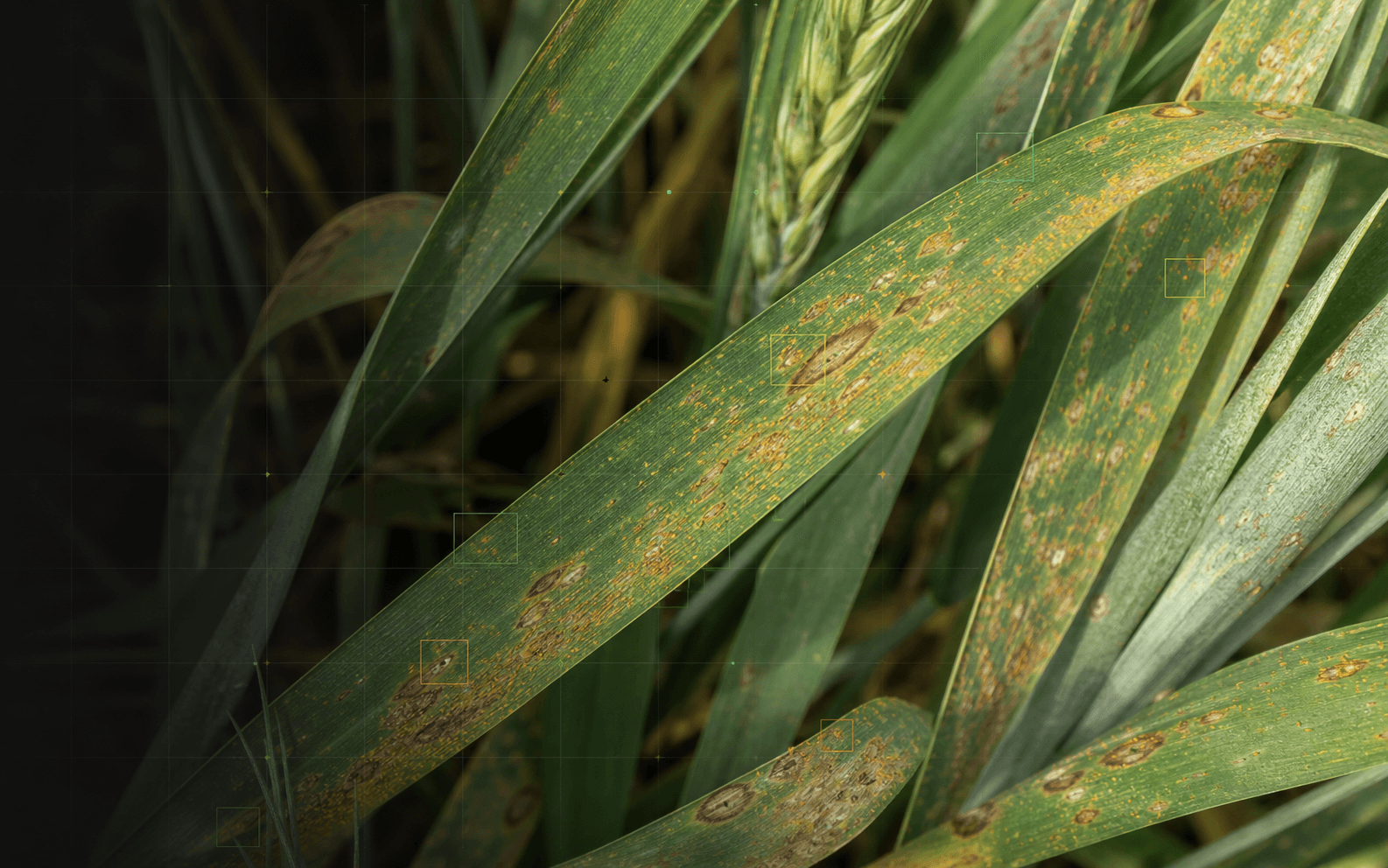
→Illustrative AI detection view02 / Field evidence
High-resolution imagery gives the model the visual evidence it needs to separate healthy tissue from disease symptoms and place each finding back on the field.
03 / Detection concept
The first model targets healthy wheat, yellow rust, brown rust, and Septoria leaf blotch. The final AI approach will be selected after a controlled classification-versus-detection experiment.
04 / Product truth
Now: a concept-stage manual survey and post-flight crop intelligence pipeline under development.
Next: autonomous waypoint coverage, onboard processing, and targeted spraying after the detection and mapping system is validated.
See the build roadmap →